Education pillar · An independent community initiative · Olympia, WA

The College We Built.
The Future We Deserve.

The Evergreen State College was founded as one of the most daring experiments in American higher education. Faculty, alumni, students, and community members are coming together to protect it — and to imagine what it can still become.

Share Your Voice About This Initiative

The community growing the evergreen

Amalie O'Connor designed this logo with a book in mind, Finding the Mother Tree by scientist Suzanne Simard, who discovered that trees in a forest are not competing. They are communicating. Through a vast underground network of roots and fungi, they share nutrients, send warnings, and nurture the young and vulnerable. The oldest, tallest tree at the centre holds the whole forest together beneath the surface, invisibly, so the entire community can grow.

The trees in this logo are all different sizes. Students. Faculty. Alumni. Parents. Community members. Legislators. All of them rooted in the same soil. All of them connected below the surface. All of them growing the evergreen together.

Otto Scharmer at MIT grounds his life's work in the same metaphor: sustainable change begins by nurturing the social soil, the foundational conditions that enable a regenerative community. The Evergreen State College was planted in that soil more than fifty years ago. The roots are deep. The community is connected. And the forest is still worth growing.
Evergreen Growing is a community conversation built on one conviction: this institution is worth fighting for. We want to hear from faculty doing extraordinary work that deserves to be seen and celebrated. From alumni transformed by an education unlike anything else in the country. From students who chose Evergreen precisely because it is different. And from community members who know what a living, thriving campus means to Olympia. If you also see decisions that need questioning, your voice belongs here too. Your submission can be anonymous. Read the story, then add yours.Share Your Voice →

The national crisis in higher education

American higher education is at an inflection point. Evergreen was built for exactly this moment.

62%

The share of American teenagers enrolling in college after high school, down from 70 percent in 2016. A lack of relevant, nearby options is one reason fewer graduates are going to college.

The Atlantic, April 2026
16%

Only 16 percent of undergraduates ages 15 to 23 took their entire degree fully online. The rush to online education is chasing a minority preference while abandoning what students actually want — a real campus experience.

The Atlantic / U.S. Dept. of Education
77%

Of recent graduates say they learned more in their first six months on the job than during their entire undergraduate education. The gap between what universities teach and what the world needs has never been wider.

Hult International Business School, 2025
30%

Only 30 percent of 2025 graduates secured full-time jobs related to their degree. Nearly half said they felt unprepared to even apply for entry-level positions in their field.

Cengage Group, 2025

The institutions that will thrive are not the ones that moved everything online. They are the ones that offer what students and employers actually need — hands-on, interdisciplinary, community-embedded learning that builds real skills alongside real people. That is Evergreen's founding promise. It has never been more relevant.

1967Year founded
0Pool petition signatures
0Current enrollment — half of peak
OlympiaRooted in community
About this initiative
Amalie O'Connor
President
Evergreen Growing

Amalie O'Connor

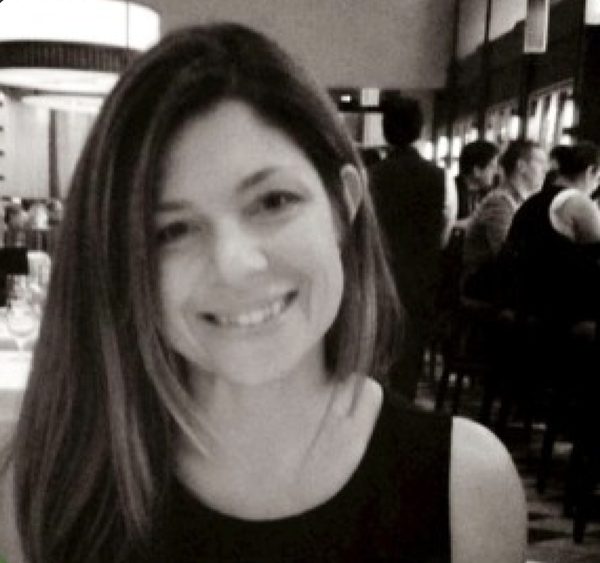
When Evergreen announced the closure of its pool — the only Olympic-size pool south of Federal Way and the only public pool on the west side of Thurston County — Amalie did what she has always done: asked the hard questions, listened to the community, and acted. A longtime Olympia resident, former budget analyst, and the parent of an Evergreen student, she started with the numbers — and this campaign grew from what they revealed.

"The pool is the canary in the coal mine. If we let it go without asking harder questions, we are accepting a trajectory that ends with the college itself. Evergreen belongs to all of us, and it is worth fighting for. Not just to preserve what it was, but to become what it still could be."

Amalie O'Connor · Founder and President, Evergreen Growing

Evergreen Growing is a community platform for faculty, alumni, students, parents, and neighbours to speak, to document, and to imagine together what this remarkable institution can still become. Her two published commentaries on the college are featured in Chapter Two below.

Read more about Amalie and where this is going →

Chapter One

What Evergreen Was Built to Be

Evergreen was not designed to look like other universities. It was designed to become what the world needed next — interdisciplinary, experimental, and capable of adapting faster than any conventional institution.

1967 · Founded
A Daring Experiment Begins

The Evergreen State College opens with a radical founding vision: interdisciplinary programmes, no departmental silos, and a belief that learning happens best when students engage with real problems in real communities. An accreditation structure built to allow the college to become what the world needs next.

Decades of Recognition
The College Others Studied

For decades Evergreen attracted students from across the country and the world who wanted something different — a living campus community that connected learning to life, trusted students to lead their own education, and produced graduates who could think across disciplines and lead through complexity.

Peak Enrollment · 2009–2011
Evergreen at Its Most Vibrant

At its peak, Evergreen enrolled more than 4,700 students — a thriving residential campus whose economic footprint was felt across Olympia and Thurston County. Students filled the coffee shops, restaurants, and businesses of downtown Olympia. That campus life was an economic force as much as an educational one.

Faculty Voice · 2021
The Warning That Went Unheard

"We should keep doing the thing we do and attracting students who will be transformed by that, rather than making moves to do things the way everyone else does them." — Evergreen faculty member, formal report to the Board of Trustees, November 2021. The trajectory continued unchanged.

Chapter Two

What the Community Is Seeing Today

Faculty, students, alumni, and community members are speaking. These are their words — honest, documented, and offered in love for an institution they want to see grow our future. To add yours, scroll to the form below.

Published · Thurston Chronicle · May 4, 2026
"Evergreen's Pool Is the Canary in the Coal Mine"
By Amalie O'Connor, Save the Evergreen Pool
Read It →
Published · Thurston Chronicle · June 11, 2026
"Stop Trying to Curl the Straight"
By Amalie O'Connor, Founder, Evergreen Growing
Read It →

Using a personal story about decades spent trying to make naturally straight hair curl, Amalie O'Connor argues that Evergreen's pursuit of a crowded online sustainability MBA market and automatable certificate programs is the institutional equivalent — years of discomfort that will never produce the desired result.

Evergreen, she writes, is not a conventional college that fell behind. It is a structurally different institution that has spent fifty years building exactly the kind of education the World Economic Forum's Future of Jobs Report 2025 now says the AI economy demands — critical thinking, adaptability, ethical reasoning, and cross-domain synthesis. Not as new additions: as Evergreen's curriculum since 1971.

She names an economic argument specific to Olympia: an online student stays where they are, spending nothing locally, while an in-person student becomes an Olympia resident for four years. Online expansion, she argues, is a choice to extract tuition while sending nothing back to the community Evergreen lives in.

Her proposal: an integrated, in-person arts, arts administration, and entrepreneurship pathway, built on the existing Changemaker Lab — an eight-year-old entrepreneurship program connected to MIT and operating in more than ten countries. She points to testimony gathered through Evergreen Growing's June 2026 listening sessions, including a student who relocated across the country for a performing arts program that no longer exists, only to find a locked stage on arrival.

"The pool is the canary in the coal mine. If we let it go without asking harder questions, we are accepting a trajectory that ends with the college itself."

Amalie O'Connor · Founder and President, Evergreen Growing

"I'm worried that the moves the administration is making will make Evergreen less the Evergreen I know and love and more into a lousy Brand X college, fighting with other schools on their turf."

Evergreen Faculty Member · Board of Trustees Report, 2021

"An emptying residential campus is not a sign that Evergreen's model has failed. It may be a sign that its leadership has lost sight of what makes it irreplaceable."

Community Voice · Thurston County

"Its full-time enrollment of 2,386 in 2024 is identical to the enrollment in 1982 and less than half of what it was in 2009 to 2011."

Evergreen State College · Institutional Enrollment Records

What the Community Has Watched Close

🏊The only Olympic-size pool south of Federal Way, closing June 2026 with two months notice
🎭The theater department, cut. The box office where tickets were once sold now has a sign directing students to the parking office, where they go to pay fines and fees.
🏃The indoor soccer arena, gone
📚The bookstore, gutted
📉Enrollment at half its peak while the campus grows visibly quieter
When a campus empties, the businesses inside it cannot surviveOn-campus dining and retail that once served a thriving student community has quietly disappeared, and the institution now closes its doors entirely on weekends during summer to save on electricity costs.
🍳The Flaming Eggplant cafe, closed
🥯Einstein's Bagels on campus, closed
🍕The campus pizzeria, closed
🔒Campus operations reduced to Monday through Thursday during summer, closed Friday to Sunday to save on electricity costs
🧩Between 10 and 30 percent of university students learn differently from the way conventional education teaches, and 65 percent of those students are not receiving the support they need. Evergreen's interdisciplinary, team-based, hands-on model is naturally suited to the full range of human minds. Moving it online removes precisely the elements that make it work.
🌿A sustainability identity abandoned: in 2009 Evergreen ranked #9 in the nation in Sierra Magazine's Cool Schools rankings, recognised as one of America's greenest campuses. By 2021 Evergreen did not appear in the rankings at all — not among 328 participating institutions.
The excuse that does not holdThe administration and board point to the national higher education crisis as the reason for Evergreen's enrollment decline. But Evergreen is not like other institutions. It was founded precisely to be different — interdisciplinary, experimental, adaptive, built for a world that conventional universities cannot serve. The institutions declining are the ones built for the Industrial Revolution. Evergreen was built for what comes next. An Evergreen that embraces rather than denies its roots should be turning away students right now. The national crisis is not Evergreen's excuse. It is Evergreen's opportunity. And the administration is missing it.
The economic argument, through the lens of economics

When a campus empties, a city feels it.

Having studied economics, Amalie O'Connor brings to Evergreen Growing a grounded understanding of what Evergreen's decline means beyond the campus gates. Universities are not just educational institutions. They are economic multipliers — every dollar spent on campus circulates through the local economy multiple times, generating employment, tax revenue, and commercial activity that sustains the businesses and neighbourhoods around them.

At its peak enrollment of more than 4,700 students, Evergreen was a significant economic engine for Olympia and Thurston County. Today enrollment stands at 2,386 — less than half its peak. Those missing students represent missing rent payments, missing meals, missing coffee shop visits, missing bookstore purchases, and missing economic activity across every block of downtown Olympia.

The shift toward online offerings compounds this further. A student taking classes from home in another city does not walk into a downtown restaurant. Does not rent an apartment near campus. Does not become part of the civic and economic fabric of Olympia. Online education exports students. Residential education embeds them and builds our future.

The economic multiplier effect of universities is well documented. Every student enrolled at a residential university generates approximately $30,000 to $50,000 in annual economic activity in the surrounding community — housing, food, transportation, retail, services. The difference between 4,700 students and 2,386 students is not just an enrollment figure. It is a gap of over $70 million in annual community economic activity, and growing.

4,700+
Peak enrollment at Evergreen, 2009 to 2011. A full, vibrant residential campus whose economic footprint was felt across every block of downtown Olympia.
Evergreen State College historical data
2,386
Current full-time enrollment — identical to 1982 levels and less than half the peak. Each missing student represents lost economic activity in the surrounding community.
Institutional Enrollment Records
16%
The share of undergraduates who took their entire degree online in 2019–20. Students want a residential experience — and the businesses around Evergreen need them to have one.
The Atlantic / U.S. Dept. of Education
#1
Washington already has the highest rate of new business failures in the nation. Downtown Olympia cannot afford to lose the economic anchor that a thriving Evergreen provides.
Association of Washington Business, 2025
Chapter Three

What Evergreen Can Still Become

The founding vision has never been more relevant. As enrollment in conventional colleges declines and online education proves no substitute for a living campus, Evergreen's experimental model is exactly what American higher education needs right now.

The global conversation is catching up · Club of Rome · February 2026

"We are in danger of educating second-class robots, not first-class humans."

In February 2026, Otto Scharmer — MIT Senior Lecturer, architect of Theory U, and Club of Rome member — published twelve principles for reimagining universities in the age of AI, together with Michael Pirson of Fordham University. They called for universities to become living ecosystems of deep action learning: locally rooted, globally connected, built on real ventures, generative listening, stakeholder immersion, and civic engagement.

These twelve principles describe exactly what a restored Evergreen State College could offer its students and its community. The global conversation is calling for the kind of interdisciplinary, hands-on, community-embedded education that Evergreen was founded to provide. Washington State has the opportunity to lead that conversation, not follow it.

Amalie O'Connor is not speaking about this from a distance. Her son is a student at Evergreen. She has watched him and his peers learn by doing — presenting visions to state legislators, building ventures that serve the community, and developing the kind of leadership that no lecture hall produces. When she says Evergreen has the potential to become exactly what the world's leading education thinkers are calling for, she has seen it. In her own family. On this campus.

Read the Club of Rome article →

Formally adopted at the first organisational meeting of Evergreen Growing, May 2026. Source: Scharmer and Pirson, Club of Rome, February 2026.

PRINCIPLE 1
Universities as Innovation Ecosystems

Locally rooted, globally connected, and oriented toward the common good — not just degree factories.

PRINCIPLE 2
First-Rate Humans, Not Second-Rate Robots

As AI displaces routine work, education must develop what cannot be automated: creativity, ethical discernment, and relational intelligence.

PRINCIPLE 3
Regenerative Eco-Economics

From extractive to regenerative models. Universities must model the economics they teach, starting with how they treat their own communities.

PRINCIPLE 4
Cultivate the Social Soil

The quality of relationships, depth of attention, and coherence of purpose matter as much as curriculum. Just as trees share nutrients through roots, learning communities grow through connection.

PRINCIPLE 5
Vertical Transformation Literacy

An operating system upgrade, not just new apps. Students need the capacity to update their own mental models, not just acquire more information.

PRINCIPLE 6
Ecosystems of Deep Action Learning

Real-world challenges as the raw material of learning. Students build capacity by engaging directly with the frontiers of disruption, hands-on and unmediated.

PRINCIPLE 7
Nature as Teacher

The living world as curriculum. Evergreen is named for the trees. The Pacific Northwest is the classroom. The mother tree is the logo. This principle is in the institution's DNA.

PRINCIPLE 8
Social Arts and Embodied Learning

Dialogue, generative listening, and the ability to think together. These are learnable skills, and they are the foundation of democratic life.

PRINCIPLE 9
Presencing Practices

Learning to sense what is emerging and act from that awareness. Theory U. The u-lab. The capacity to lead from the future as it arrives.

PRINCIPLE 10
University as Living Ecosystem

Breathing in: community immersion, stakeholder dialogue, real problems. Breathing out: policy briefs, civic engagement, community leadership. The full cycle of learning and giving back.

PRINCIPLE 11
Build the Missing Middleware

Connective infrastructure across sectors — linking students to legislators, businesses to community organisations, local knowledge to global networks.

PRINCIPLE 12
Presence, Minimal Enabling Infrastructure

A loosely coupled network of individuals and institutions, locally rooted, globally connected, committed to transforming education toward human and planetary flourishing. This is what Evergreen Growing exists to be.

Read the full Club of Rome article →
🔬
The American Laboratory

Evergreen's unique accreditation structure means it can innovate faster than any conventional university. It was built to be the institution that experiments so others can learn. That capability is urgently needed now.

Interdisciplinary · Adaptive · Experimental
🤝
Community as Classroom

Real learning happens in real communities. Evergreen's campus — embedded in Olympia, connected to Thurston County, rooted in the Pacific Northwest — is itself a learning environment no online programme can replicate.

Community · Embedded · Real
💼
Economic Multiplier

A thriving residential Evergreen means students living, eating, working, and building ventures in Olympia. It means businesses that survive. A tax base that grows. The kind of non-government economic development Thurston County needs.

Thurston County · Washington State · National
🤖
Built for the AI Era

AI is replacing routine work. The skills that matter — systems thinking, collaboration, adaptability, creative problem-solving across disciplines — are precisely what Evergreen was designed to develop. Not as a trend. As a founding principle.

Critical Thinking · Collaboration · Adaptability
🌱
Learning by Doing

Graduates who build real experience before graduation are hired at twice the rate of those who do not. Evergreen's interdisciplinary, project-based model has always understood what employers are only now beginning to demand.

Real Projects · Real Skills · Real Outcomes
🎓
A Model Others Will Come to Study

Universities across America are watching their enrollments decline. Evergreen, restored to its founding purpose and led by qualified, community-accountable leadership, becomes the institution they come to learn from — not the cautionary tale.

Leadership · Vision · Courage
🧠
Built for Every Kind of Mind

Between 10 and 30 percent of university students learn differently from the way conventional education teaches. Team learning, dialogue, hands-on projects, and self-directed inquiry are not accommodations at Evergreen. They are the architecture.

Designed for the full range of human minds
A living community document

The Curriculum Wall

What do students in our community actually want to learn? We are asking high school students, community college students, parents, and community members to tell us. Their responses will form the foundation of the programs we build for the next generation of learners at Evergreen. A selection is shown here; the full dataset is held by Evergreen Growing as a community resource. Schools and community colleges in the Olympia area are warmly invited to contribute.

"I want to learn how food systems work and how communities can grow their own food. I want to do it by actually working on a farm and connecting with local restaurants, not just reading about it in a textbook."

High school student, Olympia

In personHands-on projectsCommunity embedded

"I want to learn how to start a nonprofit that helps young people in my neighbourhood find work and purpose. I learn best by doing things with other people, not sitting in lectures. I want to build something real while I study."

Community college student, Thurston County

Team basedHands-on projectsIn person

"Mental health and how communities can support each other. I have watched people around me struggle and nobody talks about it properly. I want to understand the systems behind it and help design something better for our community."

High school student, Lacey

Community embeddedIn personTeam based

"I want to learn how technology and nature can work together instead of against each other. I am interested in renewable energy and sustainable building. I want to actually build things, not just write papers about them."

High school student, Tumwater

Hands-on projectsIn personCommunity embedded

"Civic leadership and how local government actually works. I want to understand how decisions get made and how young people can have a real voice in them. I want to work on real community problems while I study."

Community college student, Olympia

Community embeddedIn personTeam based

Add your voice to the wall

What do you want to learn? What problem in your community do you want your education to help solve?

Submit below View the live wall →
Pin your voice to the wall

Open to students, parents, educators, and community members. Schools and community colleges in the Olympia area are warmly invited to contribute on behalf of their students.

What do you want to learn — or future students to learn?

Thank you. Your submission has been pinned to the wall and will be reviewed before publishing.

Submissions are reviewed before being added to the public wall. The full dataset is held privately by Evergreen Growing to inform future program design. This is not an enrollment form.

Join the conversation

Share Your Voice

What Went Wrong

If you are faculty, staff, alumni, or a community member who witnessed decisions that harmed this institution, we want to hear from you. Your account matters. It helps us learn, document, and ensure mistakes are not repeated.

What Was Great

If you remember Evergreen at its best — a programme, a teacher, a moment, a community — tell us. That memory is evidence of what this institution is capable of and what it is worth fighting for.

What Can Be

If you have a vision for what Evergreen could become — for its students, its community, its region, and its role in the future of education — share it. This is where the future gets built.

All submissions are reviewed before publishing. You may choose to remain anonymous — your identity will never be shared without your explicit consent. Anonymous submissions are treated with the same care and respect as named ones.

View the Future Evergreen Wall →

You may request anonymity after submission

📎 Click to attach files, or drag & drop here Any file type · Up to 10 MB per file · Multiple files allowed
    Thank you. Your submission has been received and will be reviewed before publishing. Your voice matters here.
    📎 Click to attach files, or drag & drop here Any file type · Up to 10 MB per file · Multiple files allowed
      Thank you. Your submission has been received and will be reviewed before publishing.
      📎 Click to attach files, or drag & drop here Any file type · Up to 10 MB per file · Multiple files allowed
        Thank you. Your submission has been received and will be reviewed before publishing.

        Student submissions are published with first name only by default

        📎 Click to attach files, or drag & drop here Any file type · Up to 10 MB per file · Multiple files allowed
          Thank you. Your submission has been received and will be reviewed before publishing.
          📎 Click to attach files, or drag & drop here Any file type · Up to 10 MB per file · Multiple files allowed
            Thank you. Your submission has been received and will be reviewed before publishing.