Evergreen Growing is a community conversation built on one conviction: this institution is worth fighting for. We want to hear from faculty doing extraordinary work that deserves to be seen and celebrated. From alumni transformed by an education unlike anything else in the country. From students who chose Evergreen precisely because it is different, and who are proving every day that the model works. And from community members who know what a living, thriving campus means to Olympia. If you also see decisions that need questioning, your voice belongs here too. Your submission can be anonymous. Your voice matters here. Read the story, then add yours. Share Your Voice →
evergreengrowing.org, An Independent Community Initiative, Olympia, Washington
The Evergreen State College was founded as one of the most daring experiments in American higher education. Faculty, alumni, students, and community members are coming together to protect it, and to imagine what it can still become.
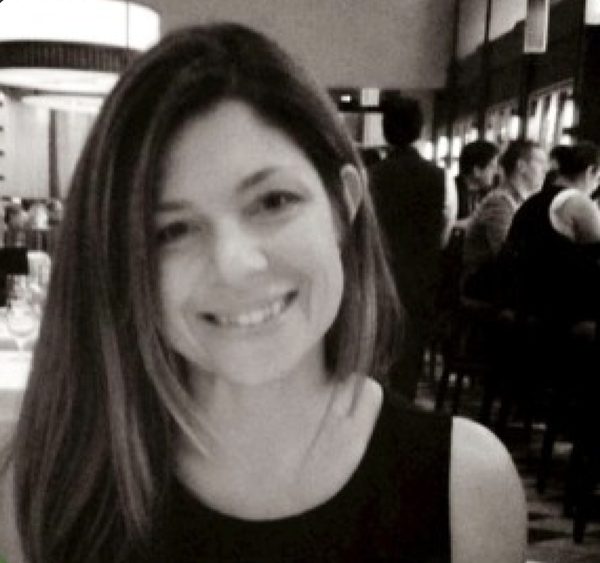
Amalie O'Connor is a former educator, community organizer, state employee, and the parent of an Evergreen State College student. She lives in Olympia and is part of the Save the Evergreen Pool grassroots community campaign.
Her undergraduate study of economics gives her a grounded understanding of what universities like Evergreen actually do for the communities that surround them. A residential campus full of students is not just an educational institution. It is an economic engine, generating spending, employment, and tax revenue that ripples through every coffee shop, restaurant, and small business in the city. When that campus empties, the community feels it.
When Evergreen announced the closure of its pool, the only Olympic-size pool south of Federal Way and the only public pool on the West side of Thurston County, Amalie did what she has always done. She asked the hard questions, listened to the community, and decided to act. Her commentary was published in the Thurston Chronicle on May 4, 2026.
Read the Commentary in the Thurston Chronicle →
"The pool is the canary in the coal mine. If we let it go without asking harder questions, we are accepting a trajectory that ends with the college itself. Evergreen belongs to all of us, and it is worth fighting for. Not just to preserve what it was, but to become what it still could be."
Amalie O'Connor, Founder and President, Evergreen GrowingIn June 2026, Amalie published a second commentary, "Stop Trying to Curl the Straight," making the case for an integrated arts and entrepreneurship pathway built on Evergreen's existing Changemaker Lab.
Read "Stop Trying to Curl the Straight" →
Evergreen Growing is a community platform, for faculty, alumni, students, parents, and neighbours to speak, to document, and to imagine together what this remarkable institution can still become.
Evergreen was not designed to look like other universities. It was designed to become what the world needed next, interdisciplinary, experimental, and capable of adapting faster than any conventional institution.
Faculty, students, alumni, and community members are speaking. These are their words, honest, documented, and offered in love for an institution they want to see grow our future.
Some of the voices we have heard so far. To add yours, scroll to the bottom of this page.
Published, Thurston Chronicle, May 4, 2026
"Evergreen's Pool Is the Canary in the Coal Mine"
By Amalie O'Connor, Save the Evergreen Pool
Published, Thurston Chronicle, June 11, 2026
"Stop Trying to Curl the Straight"
By Amalie O'Connor, Founder, Evergreen Growing
Using a personal story about decades spent trying to make naturally straight hair curl, Amalie O'Connor argues that Evergreen's pursuit of a crowded online sustainability MBA market and automatable certificate programs is the institutional equivalent, years of discomfort that will never produce the desired result.
Evergreen, she writes, is not a conventional college that fell behind. It is a structurally different institution that has spent fifty years building exactly the kind of education the World Economic Forum's Future of Jobs Report 2025 now says the AI economy demands, critical thinking, adaptability, ethical reasoning, and cross-domain synthesis, not as new additions, but as Evergreen's curriculum since 1971.
She names an economic argument specific to Olympia: an online student stays where they are, spending nothing locally, while an in-person student becomes an Olympia resident for four years. Online expansion, she argues, is a choice to extract tuition while sending nothing back to the community Evergreen lives in.
Her proposal: an integrated, in-person arts, arts administration, and entrepreneurship pathway, built on the existing Changemaker Lab, an eight-year-old entrepreneurship program connected to MIT and operating in more than ten countries. She points to testimony gathered through Evergreen Growing's June 2026 listening sessions, including a student who relocated across the country for a performing arts program that no longer exists, only to find a locked stage on arrival.
"The pool is the canary in the coal mine. If we let it go without asking harder questions, we are accepting a trajectory that ends with the college itself."
Amalie O'Connor, Founder and President, Evergreen Growing
"I'm worried that the moves the administration is making will make Evergreen less the Evergreen I know and love and more into a lousy Brand X college, fighting with other schools on their turf."
Evergreen Faculty Member, Board of Trustees Report, 2021
"An emptying residential campus is not a sign that Evergreen's model has failed. It may be a sign that its leadership has lost sight of what makes it irreplaceable."
Community Voice, Thurston County
"Its full-time enrollment of 2,386 in 2024 is identical to the enrollment in 1982 and less than half of what it was in 2009 to 2011."
Evergreen State College, Institutional Enrollment Records
When a campus empties, the businesses inside it cannot survive
On-campus dining and retail that once served a thriving student community has quietly disappeared, and the institution now closes its doors entirely on weekends during summer to save on electricity costs.
The Excuse That Does Not Hold
The administration and board point to the national higher education crisis as the reason for Evergreen's enrollment decline. But Evergreen is not like other institutions. It was founded precisely to be different, interdisciplinary, experimental, and adaptive, built for a world that conventional universities cannot serve. The institutions declining are the ones built for the Industrial Revolution. Evergreen was built for what comes next. An Evergreen that embraces rather than denies its roots should be turning away students right now. The national crisis is not Evergreen's excuse. It is Evergreen's opportunity. And the administration is missing it.
The founding vision has never been more relevant. As enrollment in conventional colleges declines and online education proves no substitute for a living campus, Evergreen's experimental model is exactly what American higher education needs right now.
The Atlantic recently reported that the share of American teenagers enrolling in college has dropped from 70 percent in 2016 to 62 percent in 2022, and that a lack of relevant, nearby options is one reason. Only 16 percent of undergraduates took their entire degree online. Students want a real campus experience. They want to learn alongside real people solving real problems. That is what Evergreen was built to provide.
The Global Conversation Is Catching Up, Club of Rome, February 2026
"We are in danger of educating second-class robots, not first-class humans."
In February 2026, Otto Scharmer, MIT Senior Lecturer, architect of Theory U, and Club of Rome member, published twelve principles for reimagining universities in the age of AI. Together with Michael Pirson of Fordham University, they called for universities to become living ecosystems of deep action learning, locally rooted, globally connected, built on real ventures, generative listening, stakeholder immersion, and civic engagement.
These twelve principles describe exactly what a restored Evergreen State College could offer its students and its community. The global conversation is calling for the kind of interdisciplinary, hands-on, community-embedded education that Evergreen was founded to provide. Washington State has the opportunity to lead that conversation, not follow it.
Amalie O'Connor, who founded Evergreen Growing, is not speaking about this from a distance. Her son is a student at Evergreen. She has watched him and his peers learn by doing, presenting visions to state legislators, building ventures that serve the community, and developing the kind of leadership that no lecture hall produces. She has supported those students herself, connecting them to her network and her community. When she says Evergreen has the potential to become exactly what the world's leading education thinkers are calling for, she has seen it. In her own family. On this campus.
Read the Club of Rome Article →Evergreen's unique accreditation structure means it can innovate faster than any conventional university. It was built to be the institution that experiments so others can learn. That capability is urgently needed now.
Real learning happens in real communities. Evergreen's campus, embedded in Olympia, connected to Thurston County, rooted in the Pacific Northwest, is itself a learning environment no online programme can replicate.
A thriving residential Evergreen means students living, eating, working, and building ventures in Olympia. It means businesses that survive. It means a tax base that grows. It means the kind of non-government economic development that Thurston County needs and has struggled to build.
AI is replacing routine work. The skills that matter, systems thinking, collaboration, adaptability, creative problem-solving across disciplines, are precisely what Evergreen was designed to develop. Not as a trend. As a founding principle.
Graduates who build real experience before graduation are hired at twice the rate of those who do not. Evergreen's interdisciplinary, project-based model has always understood what employers are only now beginning to demand.
Universities across America are watching their enrollments decline. Evergreen, restored to its founding purpose and led by qualified, community-accountable leadership, becomes the institution they come to learn from, not the cautionary tale they use to justify the status quo.
Between 10 and 30 percent of university students learn differently from the way conventional education teaches. Lecture halls, rigid schedules, and individual assessment were designed for one kind of learner. Evergreen was built for something broader. Team learning, dialogue, hands-on projects, and self-directed inquiry are not accommodations. They are the architecture. An Evergreen that embraces this fully becomes the university that works for every mind.
A Living Community Document
What do students in our community actually want to learn? We are asking high school students, community college students, parents, and community members to tell us. Their responses will form the foundation of the programs we build for the next generation of learners at Evergreen.
A selection of submissions is shown here. The full dataset is held by Evergreen Growing as a community resource, informing future program design and curriculum development. Schools and community colleges in the Olympia area are warmly invited to contribute.
From the Wall So Far
"I want to learn how food systems work and how communities can grow their own food. I want to do it by actually working on a farm and connecting with local restaurants, not just reading about it in a textbook."
High school student, Olympia
"I want to learn how to start a nonprofit that helps young people in my neighbourhood find work and purpose. I learn best by doing things with other people, not sitting in lectures. I want to build something real while I study."
Community college student, Thurston County
"Mental health and how communities can support each other. I have watched people around me struggle and nobody talks about it properly. I want to understand the systems behind it and help design something better for our community."
High school student, Lacey
"I want to learn how technology and nature can work together instead of against each other. I am interested in renewable energy and sustainable building. I want to actually build things, not just write papers about them."
High school student, Tumwater
"Civic leadership and how local government actually works. I want to understand how decisions get made and how young people can have a real voice in them. I want to work on real community problems while I study."
Community college student, Olympia
Add your voice to the wall
What do you want to learn? What problem in your community do you want your education to help solve?
Submit Below View the Live Wall →Pin Your Voice to the Wall
Open to students, parents, educators, and community members. Schools and community colleges in the Olympia area are warmly invited to contribute on behalf of their students.
What do you want to learn or future students to learn?
Your identity will never be shared without your explicit consent.
Submissions are reviewed before being added to the public wall. The full dataset is held privately by Evergreen Growing to inform future program design. This is not an enrollment form.
What Went Wrong
If you are faculty, staff, alumni, or a community member who witnessed decisions that harmed this institution, we want to hear from you. Your account matters. It helps us learn, document, and ensure mistakes are not repeated.
What Was Great
If you remember Evergreen at its best, a programme, a teacher, a moment, a community, tell us. That memory is evidence of what this institution is capable of and what it is worth fighting for.
What Can Be
If you have a vision for what Evergreen could become, for its students, its community, its region, and its role in the future of education, share it. This is where the future gets built.
All submissions are reviewed before publishing. You may choose to remain anonymous, your identity will never be shared without your explicit consent. Anonymous submissions are treated with the same care and respect as named ones.
View the Future Evergreen Wall →
You may request anonymity after submission
Your identity will never be shared without your explicit consent.
Student submissions are published with first name only by default
Your identity will never be shared without your explicit consent.